

Discovery
Understanding Before Building
Every successful system starts with clarity. Before writing code, I focus on understanding the real problem.
A systems-driven approach focused on clarity, scalability, maintainbility, and real-world usability across branding, digital products, and engineering workflows



Whether developing applications, designing interfaces, or building visual identities, the focus remains the same: creating systems that remain scalable, reusable, and consistent over time.
The methodology prioritizes structure, long-term adaptability, and deliberate decision-making rather than short-term execution alone. With focus on building reusable, composable structures—whether that’s through modular components, recursive builders, or well-defined data flows. This reduces redundancy, improves consistency, and allows products to evolve without constant rework.
A structured process from concept to delivery.
[01] Discovery
Every successful system starts with clarity. Before writing code, I focus on understanding the real problem—business goals, user needs, and technical constraints.
What happens here:
Outputs:
Meta:
[02] Architecture
Once the problem is clear, I determine how the solution should work. This is where features, interfaces, data, integrations, and technical decisions come together into a practical system.
What happens here:
Outputs:
Meta:
[03] Build
With the foundation established, I move into implementation. Development is iterative, with each part of the system built, tested, reviewed, and refined rather than pushed through as one large delivery.
What happens here:
Outputs:
Meta:
[04] Launch & Evolve
Launch is not the end of the project. I make sure the finished system is ready for real users, then use feedback, performance data, and changing requirements to guide what comes next.
What happens here:
Outputs:
Meta:
This approach ensures that decisions are intentional at every stage, not reactive.
Tools That Serve the System
Tools are selected based on what best supports the outcome — whether that involves scalability, maintainability, performance, visual consistency, collaboration workflows, or speed of execution.
TBecause of this, the approach to technology, design systems, infrastructure, and implementation is never treated as one-size-fits-all.
Core technologies and platforms commonly used across projects include:
However, the focus is never placed on the tools themselves, but on the level of technical, creative, and strategic expertise required to apply them effectively within the context of each project.
Some projects demand lightweight execution and rapid iteration, while others require deeper architectural planning, scalable systems, complex integrations, structured identity systems, or multi-platform coordination. The scope, technical depth, and problem-solving involved naturally influence the direction, workflow, and overall investment required for each engagement.
Rather than forcing projects into a fixed process or stack, the methodology adapts to what the work actually demands — ensuring that every solution, identity system, or digital product is approached with the level of precision and expertise necessary to achieve the strongest long-term outcome.

InvoiceSpace

Operant (coming soon)
Mobile, Web, and Desktop Applications — from Servers to UI
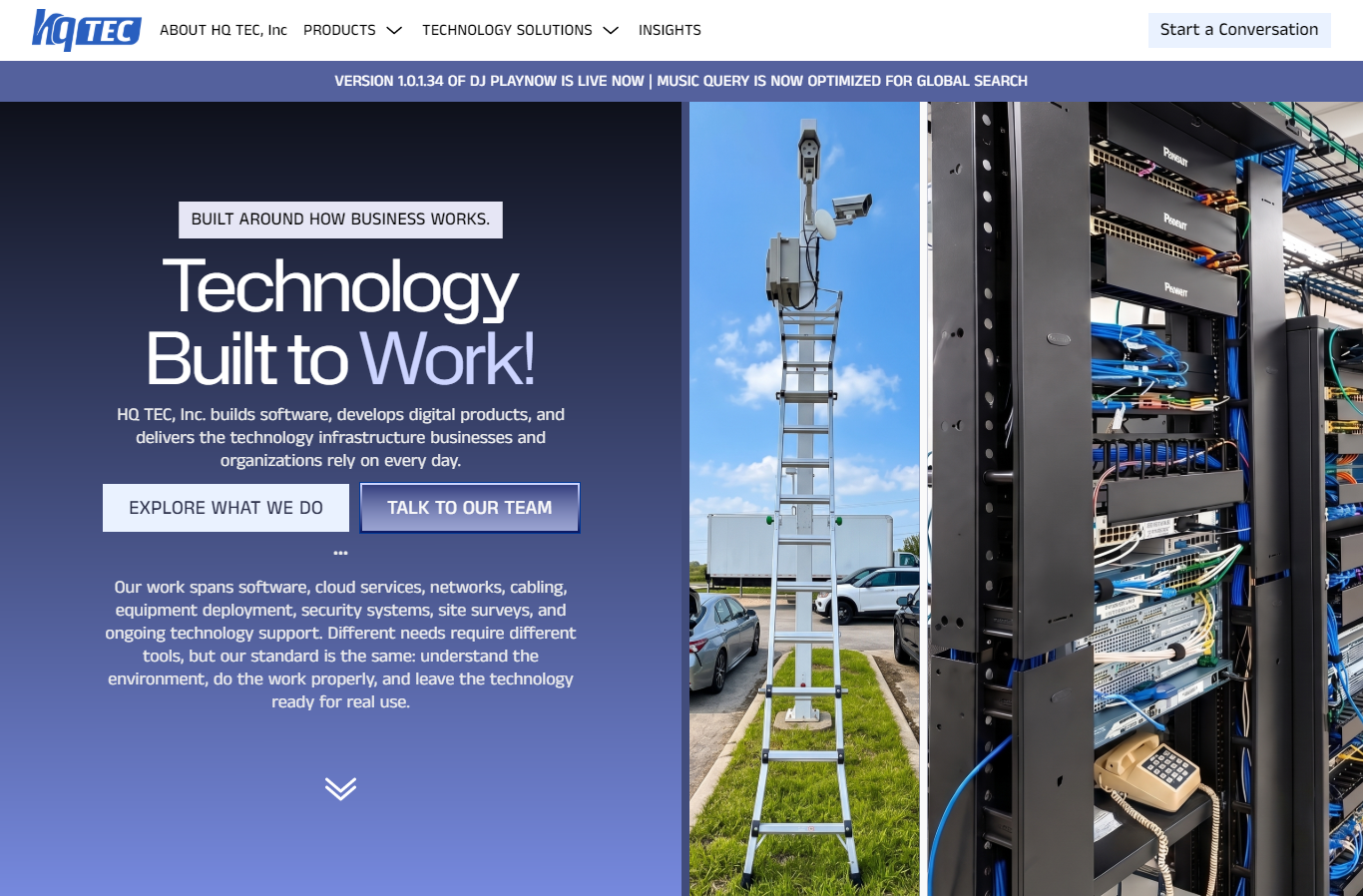
Corporate Website
10/2026
Redesigned and developed HQ TEC, Inc new website presence, creating a professional website that accurately matches the quality of work they provided
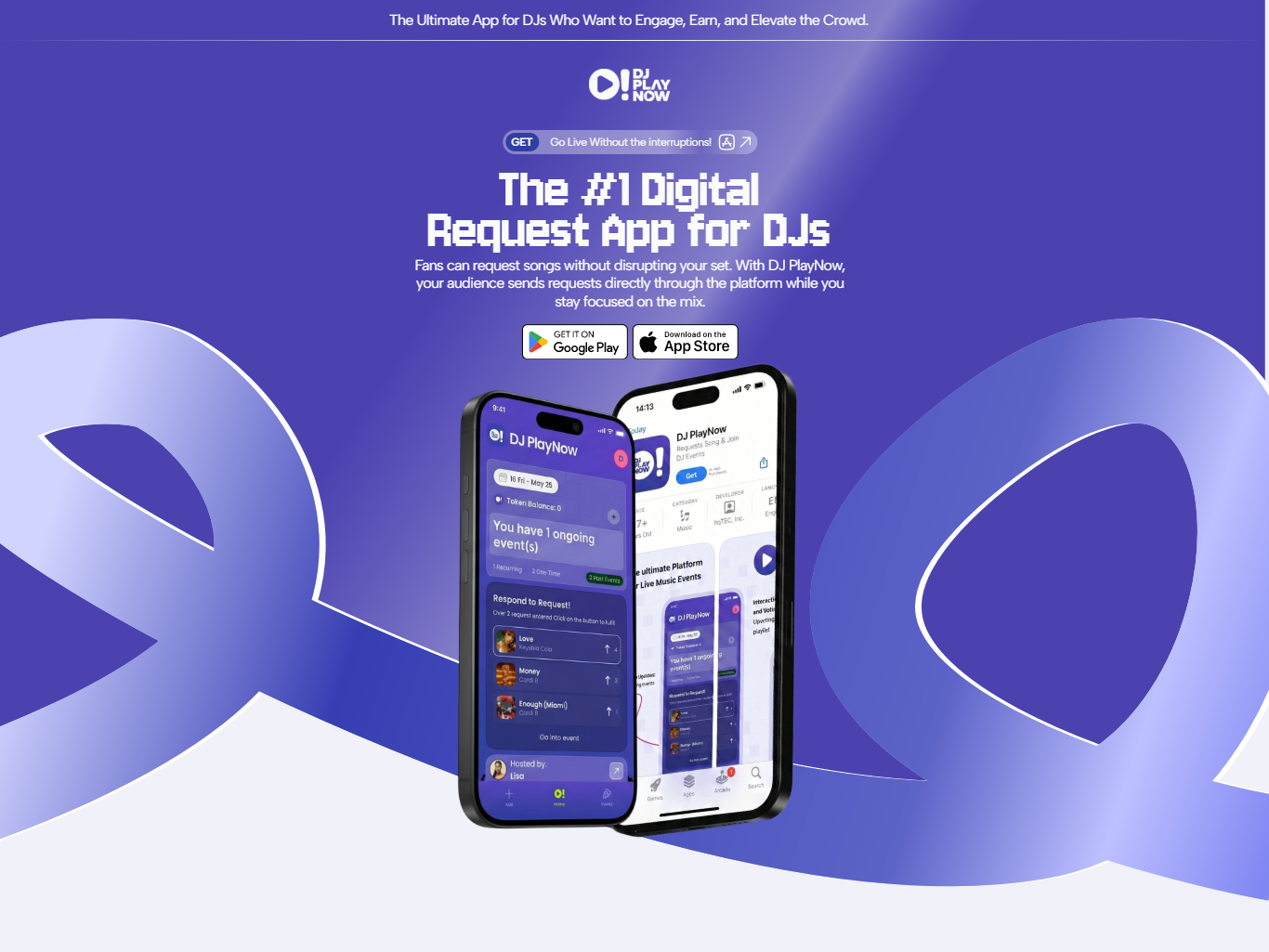
Landing Page
04/2026
Designed and developed the landing page to the DJ PlayNow mobile app, featuring contact forms and Help Guide
Mobile App
03/2025
DJ Play Now is a mobile application designed to streamline the music request process during live events
Timeline: 3-7d
Discovery and Planning
Research, Analysis, Strategy
Timeline: 7d
Architecture
Architecture, Planning, Systems Design
Timeline: 7-14d
Implementation
Development, Integration, Iteration
Timeline: 7d
Refinement & Delivery
Optimization, QA, Deployment
Every successful system starts with clarity. Before writing code, I focus on understanding the real problem.

With clarity established, the next step is defining how the system should behave—structurally and logically.

Development is executed against a defined structure. The focus is on writing clean, reusable, and predictable code that aligns with the system design.

Before delivery, the system is refined for performance, usability, and long-term reliability. This ensures the product doesn’t just work—it works well.

Jeremi College
Jeremi College is a career-focused higher education institution that provides hands-on training in healthcare and information technology, preparing students with practical skills and industry-recognized certifications for in-demand careers.

Rytech Solutions
RyTech Solutions is a technology services company specializing in solar energy support, technical inspections, project management, and field engineering. It helps clients improve project performance through innovative solutions, quality assurance, and reliable technical expertise across the solar industry.

Hqtec Inc
Hqtec Inc. builds software, deploys technology, and supports the infrastructure businesses rely on every day.
Rose Technologies
Rose Technologies is an IT services company specializing in technology infrastructure, managed IT support, network solutions, telecommunications, security systems, and business technology deployments for organizations across various industries.

Over the past several years, I've had the opportunity to work with unique minds in businesses, startups, and independent ventures across software development, brand identity, and digital design. Every project has taught me something different. Some challenged the way I approach engineering, others reshaped how I think about design, branding, or collaboration.
I enjoy solving problems that require both structure and creativity. Whether the work involves software, branding, or design, I prefer understanding the bigger picture before deciding how to build it. Good outcomes come from thoughtful planning, clear communication, and continuous refinement.
I've always been interested in complete systems rather than individual disciplines. Software, identity, and design are different expressions of the same objective: helping businesses communicate, operate, and grow more effectively. Working across these areas allows me to make better decisions by understanding how they influence one another.
Projects that involve solving meaningful problems, building long-term products, or helping businesses establish a stronger digital presence. Whether it's a new venture, an established organization, or an evolving product, I enjoy work that values thoughtful execution over quick fixes.
Yes. I'm open to freelance engagements, long-term partnerships, consulting opportunities, and full-time roles where I can contribute to meaningful products and collaborate with ambitious teams.
Every project begins with understanding the goals, constraints, and context behind the project. From there, the process progresses into collaborative research, planning, execution, and feedback to ensure decisions remain aligned with the long-term objectives rather than just the immediate deliverables.
My experience spans education, consumer products, entertainment, nonprofit organizations, and startup ventures. Working across different industries has reinforced the importance of adapting systems and processes to the unique challenges of each project rather than relying on a single formula.
Beyond client work, I enjoy exploring better ways to build scalable systems, improve developer workflows, and create cohesive brand experiences. I'm particularly interested in the intersection of technology, design systems, automation, and products that solve practical, everyday problems.
Curiosity, honesty, and mutual respect. The best projects come from open conversations, shared ownership of outcomes, and a willingness to explore better solutions together rather than simply executing a predefined checklist.
Simply use the inquiry form. Whether you have a project in mind, an opportunity to discuss, or you're just interested in connecting, I'm always happy to hear the context first before talking about solutions.